Meet the Participants:
The Regeneration Program 2025
In November 2025, after months of research and preparation, we kicked off The Regeneration Program: a five-month journey for organizations that are moving beyond sustainability toward true regeneration, by restoring ecosystems, communities, and culture. In this article we’ll introduce you to all of the participants.
All of the participants of The Regeneration Program have been hand selected from a large number of applicants, by a panel of multi-disciplinary business experts. They all operate with regenerative principles at their core, have a team and revenue, and are working toward intergenerational positive impact.
Over the course of the program, this cohort will sharpen their regenerative vision and strategy, explore ownership and finance models that protect their mission, and work through their real business challenges with experts and peers.
Article continues below the image(s) ↓


Meet the participants
To make the breadth of this cohort easier to navigate, we’ve organised the participants into five themes: We’re all Catalysts, Community Driven, People in Action, A Good Middleman and Material Innovation.
These are not strict boxes, but lenses that highlight the different roles they play in building a regenerative economy; From leadership and landscapes to value chains and materials.
WE’RE ALL CATALYSTS
Bomenland works to create resilient, future-proof landscapes by integrating agroforestry into Dutch farming systems at scale. Their mission is to make landscape restoration with trees an integral part of profitable, vital farms – not a side project.
Using a regional cluster approach, Bomenland brings together groups of farmers and landowners to collaborate on planting, maintenance, processing, and sales. This cooperation produces economically viable, ecologically rich systems that restore biodiversity and soil health while strengthening rural economies.
-
Team: 2
-
Founded: 2025
-
Business model: Annual service fees for agroforestry implementation, plus a share of future yields and carbon credit revenue
Regeneration NL is a Dutch network organization focused on regenerative leadership – empowering individuals, organizations, and communities to operate in harmony with social and natural systems.
Through coaching, training, consultancy, and facilitation, they guide transitions from “sustainability” as a set of goals toward regeneration as a way of working, organizing, and making decisions. The organization is evolving toward a steward-owned structure, with a foundation and private limited company that embed long-term impact in ownership and governance.
-
Team: 6–8
-
Founded: 2024
-
Business model: B2B, partnership-based
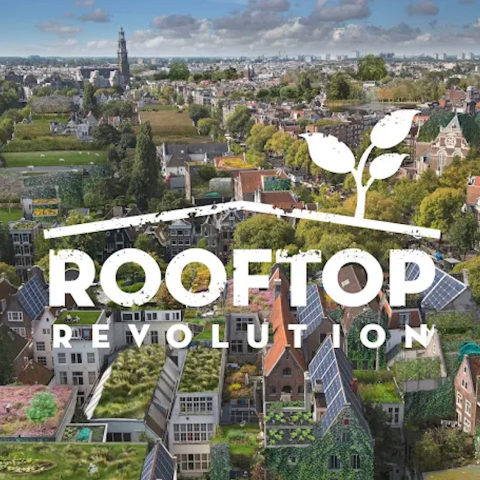
Rooftop Revolution is a non-profit foundation that brings nature back into cities by transforming rooftops – the largest unused surface in urban areas – into green, biodiverse, climate-adaptive ecosystems.
Through research, campaigns, and hands-on project support, they work with municipalities, building owners, and citizens to turn the urban roofscape into living infrastructure that mitigates heat stress, captures rainwater, and reconnects people with nature above their heads.
-
Team: 12
-
Founded: 2016
-
Business model: Paid campaigns for governments and consultancy projects for governments and roof owners
COMMUNITY DRIVEN
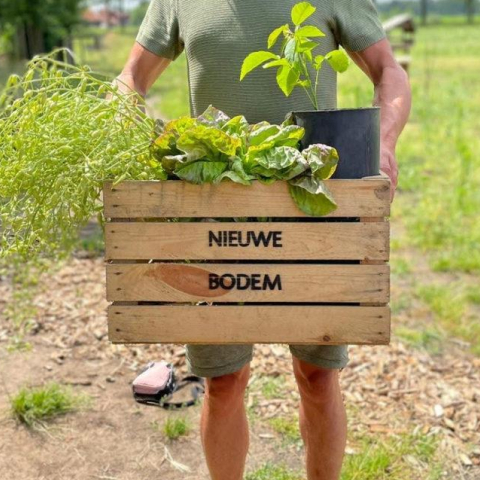
Nieuwe Bodem is a regenerative agroforestry enterprise cultivating herbal teas, nuts, and diverse perennial crops while restoring biodiversity, soil health, and local food resilience.
The organization operates along two main lines:
-
A tree adoption program with over 200 participants adopting nut and fruit trees to support long-term landscape restoration.
-
The production of regenerative tea herbs, sold under the Nieuwe Bodem brand and to partners such as Wilder Land and Roze Bunker.
The farm also serves as a living lab, hosting projects like NETTLE, which explores transforming nettles into sustainable textile fibers while enriching biodiversity and soil.
-
Team: 10–15
-
Founded: 2021
-
Business model: B2C sales of tea herbs (bulk and bags) and annual contributions from tree adopters
Voedselpark Amsterdam is working to build communities in which ecology and food security are central. They do this through food park concepts: agro-ecological landscape parks where food production, processing, distribution, sustainable innovation, education, knowledge sharing, nature, recreation, and care come together.
The team is now focused on moving from vision to strategy and operation – clarifying their business model, choosing the right governance structure (foundation, cooperative of entrepreneurs, or hybrid), and evolving their brand story from activism to concrete, scalable action.
-
Team: ±10–15 (core team)
-
Founded: 2022
-
Business model: Crowdfunding, space rental, events, workshops, and hospitality
PEOPLE IN ACTION
Compostier designs and builds “worm hotels” – beautiful, functional compost systems that convert organic waste into rich worm compost. These installations often become neighborhood meeting points that bring people together through shared composting and greening.
Compostier collaborates with schools, restaurants, and offices, strengthening local circular food systems and soil health. Their latest innovation, WºRM_H2O, combines worm composting with the brewing of Actively Aerated Compost Tea (ABC Tea), a powerful biofertilizer that both enriches soils and accelerates composting.
-
Team: 5
-
Founded: 2014
-
Business model: B2B sales of composting products, plus support, maintenance, education, and lectures
The Pollinators is a Dutch non-profit foundation that connects people to restore biodiversity and protect pollinating insects such as bees and butterflies. Through large-scale campaigns, educational programs, and community initiatives, they mobilize citizens, organizations, and businesses to take tangible action.
Key initiatives include Food Banks for Bees, The Pollinators Academy, and The Super Pollinator Program, which combine education, community engagement, and landscape impact at scale.
-
Team: 8 core team, ~30 workshop facilitators
-
Founded: 2016
-
Business model: Partnerships with companies, funds, and governments, plus donations and campaign collaborations
A GOOD MIDDLEMAN
This Side Up is a coffee import company that represents coffee farmers transparently in the European market. Rather than acting as a traditional intermediary, they build direct, trust-based relationships between smallholder coffee communities and roasters.
Operating across 14 countries in Africa, Latin America, and Asia, This Side Up enables farmers to access markets, grow their independence, and reinvest in regenerative practices. Their fixed, non-percentage margin per kilo is fully transparent and linked to the actual services used, creating a more equitable distribution of value along the chain.
-
Team: 9
-
Founded: 2013
-
Business model: Fixed, transparent margin on every kilo of coffee, based on services rendered
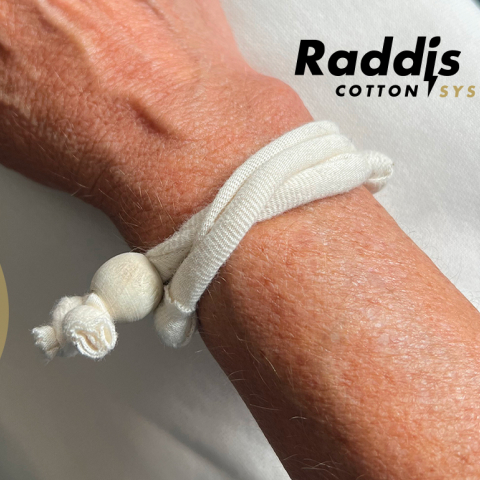
Yassasree operates in the textile and agricultural value chain, focusing on regenerative and sustainable cotton production in India, Türkiye, and Sri Lanka. Through its brand initiative Raddis®, the company works with local organizations to support over 33,000 small-scale farmer families in transitioning from conventional to regenerative agriculture.
Raddis® offers a full value-chain model, from regenerative cotton cultivation to transparent partnerships with fashion and textile brands. Projects like the Circular Cotton Cascade advance circular economy practices, fair farmer remuneration, biodiversity enhancement, and traceability from field to finished garment.
-
Team: 3
-
Founded: 2010
-
Business model: B2B, margin-based sales and consultancy services
MATERIAL INNOVATION
OostaMo creates slow-crafted botanical drinks made by steeping bags of dried botanicals in cold tap water overnight. They provide cafés, restaurants, and offices with 100% natural, sugar-free, plastic-free drink bases.
By sourcing directly from small regenerative farmers and cutting out intermediaries, OostaMo builds transparent, nature-positive supply chains, ensuring fair pay for farmers while offering a climate-friendly alternative to conventional soft drinks.
-
Team: 4
-
Founded: 2021
-
Business model: B2B sales of botanical drink bags to food service clients
Roua Atelier is a sustainable natural dye company dedicated to transforming the textile dyeing industry. They develop and implement eco-friendly dyeing systems that minimize water use, energy consumption, and waste, making natural dyes a viable alternative to conventional synthetic processes.
Within The Regeneration Program, Roua Atelier aims to strengthen its regenerative business model and ownership structure, develop tools to measure true environmental and social impact, and explore sustainable funding strategies while connecting with a network of regenerative entrepreneurs, partners, and investors.
-
Team: 2 employees; 9 collaborators
-
Founded: 2020
-
Business model: B2B and B2C
Why this matters,
and what’s next…
Regeneration is no longer a “nice to have”, it’s becoming a strategic response to climate risk, biodiversity loss, social inequality, and tightening regulation. What’s often missing are the real-world examples that show how regenerative models can work across sectors, at different stages, and with viable business and ownership structures.
This cohort provides exactly that: a set of living, working examples that other entrepreneurs can learn from, corporates can partner with, investors can back, and researchers can study and help scale. Leading by example, covering almost a full value chain of regenerative innovation.
In the coming months, we’ll work alongside these organizations within The Regeneration Program as they refine their strategies, stress-test their business models, and explore collaborations with investors, corporates, researchers, and fellow entrepreneurs.
PARTNERS OF THE REGENERATION PROGRAM